Tutorials
GEO vs SEO: What the Difference Means for AI Visibility
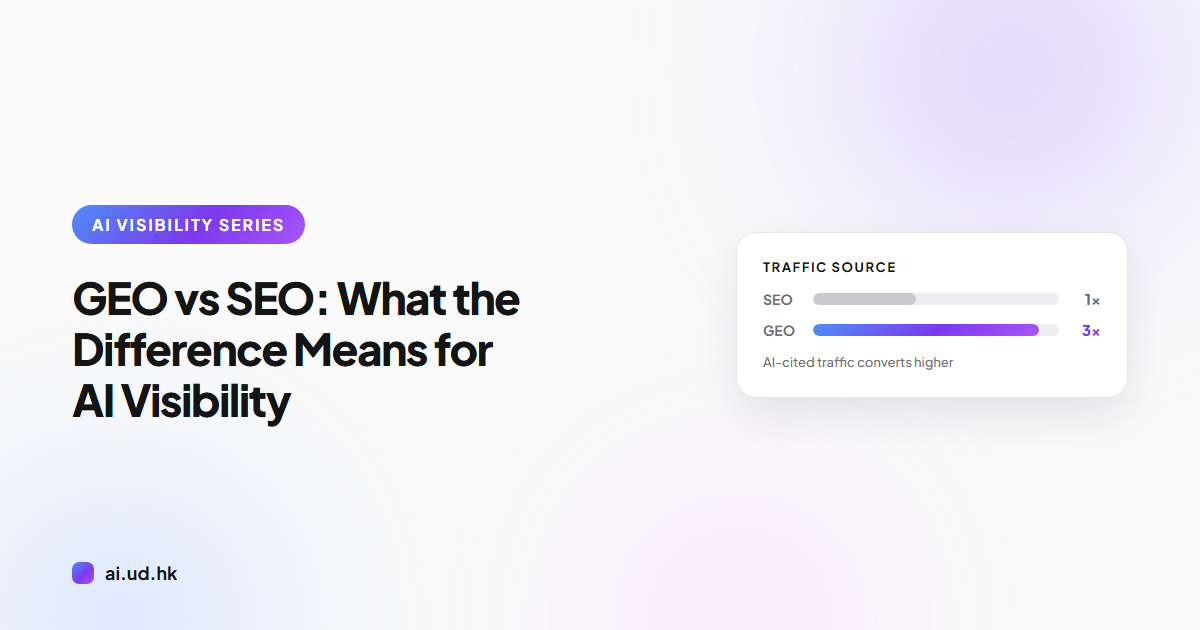
SEO competes for rankings and clicks. GEO competes for AI citations and mentions. See where the two overlap, where they differ, and what to fix first.
SEO aims to win rankings and clicks on search engine results pages. GEO aims to get your content cited and mentioned in the answers that generative AI produces. The two are not an either-or choice: they share the same foundation and differ in emphasis, and this article walks through both sides.
Definitions First, Plus One Naming Trap
SEO (search engine optimization) is the set of practices that improves a website's position in search results, with the goal of earning more organic clicks. GEO (generative engine optimization) is the set of practices that helps AI engines such as ChatGPT and Perplexity extract, cite, and mention your content, with the goal of appearing inside AI-generated answers.
You will also see the term AEO (answer engine optimization) used for a similar concept. Be aware that in English, AEO collides with an unrelated meaning: it is the name of a customs certification program, Authorized Economic Operator. When you mean the AI topic, unambiguous terms like GEO, AI search optimization, or AI visibility are clearer.
Different Scoreboards: Rankings vs Citations
SEO is scored on rankings, impressions, and clicks. Users see a list of search results, click through to your site, and the traffic is yours.
GEO is scored on citations and mentions. An AI engine reads multiple sources, generates an answer, and may attach source links or may only name your brand. The user might never visit your site, but your content and brand are already inside the answer.
This difference sets the optimization target. SEO works on whether a page can rank near the top. GEO works on whether a specific passage can be lifted out and used directly.
Where They Overlap: The Fundamentals Serve Both
The good news is that both disciplines stand on the same foundation. Do the following work once and SEO and GEO benefit together.
Content quality. Accurate, in-depth content that answers real questions is favored by search engines and AI engines alike.
Crawlability. AI engines rely on crawlers to fetch content, and the mainstream ones include GPTBot (OpenAI), ClaudeBot (Anthropic), and PerplexityBot. If your robots.txt or firewall blocks them all, even excellent content will never be cited.
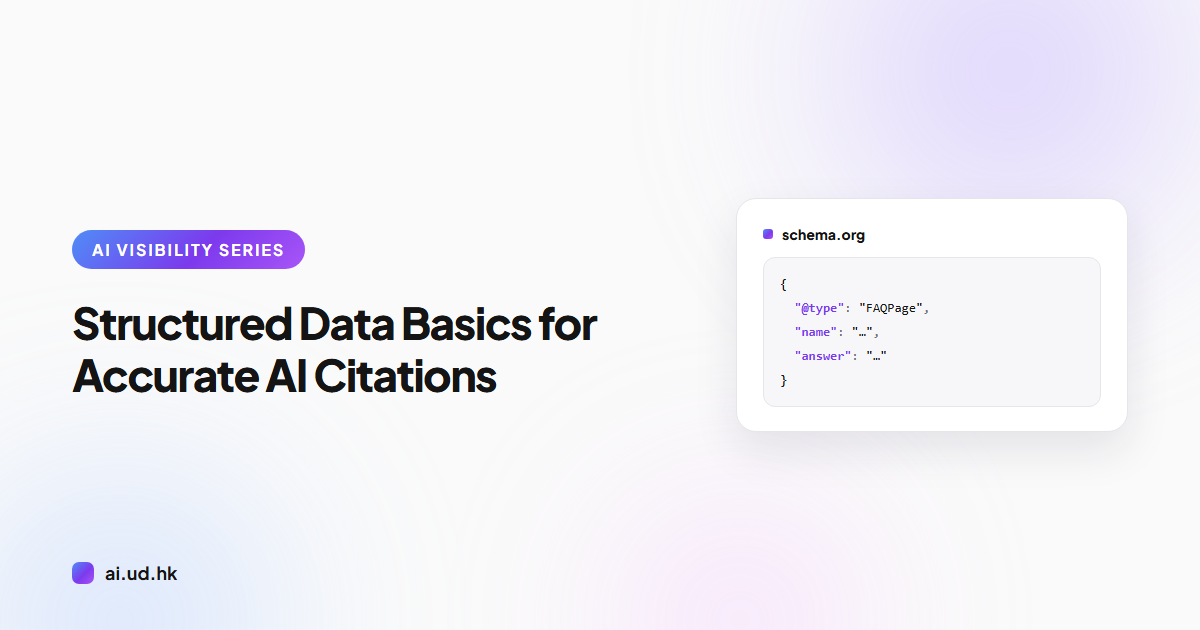
Structured data. JSON-LD markup lets machines understand a page precisely. Q&A content marked up with FAQPage is especially easy for AI engines to extract and cite, while Organization markup helps AI identify your company as a distinct entity.
Speed and readability. Fast server responses, clean HTML structure, and key content that does not depend on JavaScript rendering are friendly to crawlers on both sides.
Where They Diverge: GEO Adds Three Jobs
On top of the shared foundation, GEO has its own priorities.
Citable statements. AI engines prefer to extract complete, self-contained sentences. A line like "This tool is free, supports Traditional Chinese, and requires no sign-up" is far more likely to be quoted verbatim than a vague description scattered across three paragraphs. Write key definitions and conclusions as sentences that stand alone.
Entity consistency. Keep your company name, product names, address, and service descriptions consistent across your website, social platforms, and directory listings. Only then can AI attribute scattered information to a single entity, and inconsistent naming leads to fragmented or incorrect mentions.
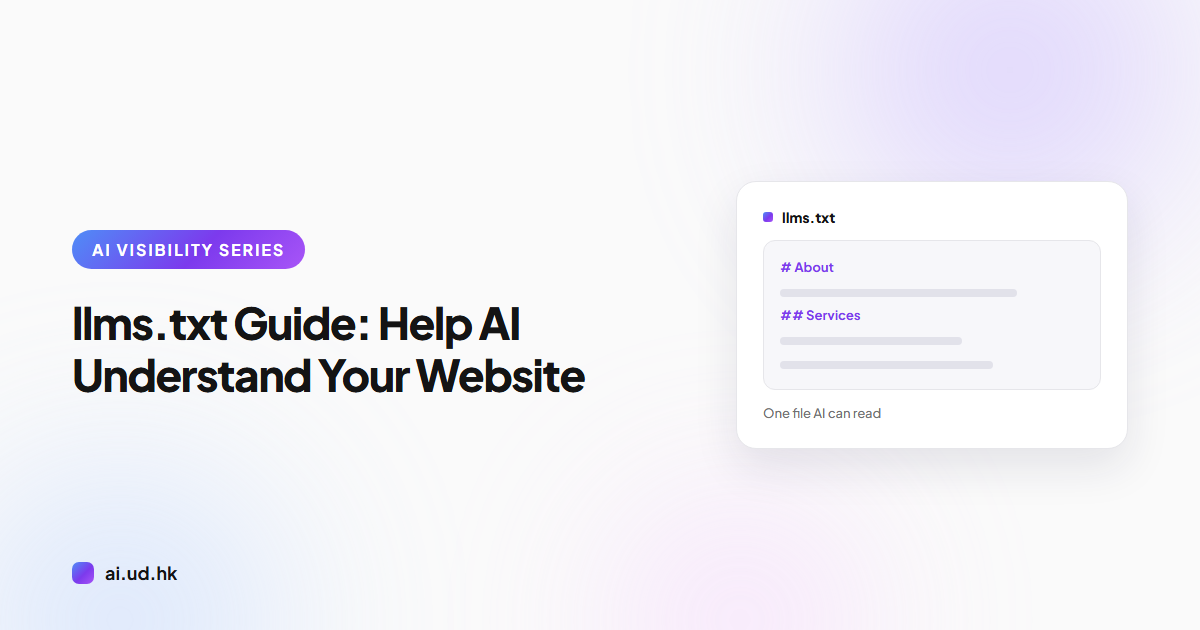
Question-and-answer structure. Users ask AI full questions, so content that uses a question as the heading and puts the answer first has a natural advantage. You can also place an llms.txt file in your site's root directory: it is a proposed plain-text file that summarizes your site's key content in Markdown for large language models, and it complements robots.txt rather than replacing it.
Where Hong Kong Websites Stand: Fundamentals Pay Off Most
From what we see in practice, most Hong Kong websites have not handled even basic AI readability. They do not know whether robots.txt is blocking AI crawlers, they carry no structured data, their key content hides behind JavaScript rendering, and they have no question-and-answer content at all.
That is actually an opportunity. With competitors not yet off the starting line, a site that gets the fundamentals right has a much better chance of appearing in AI answers.
The recommended order is this: first confirm that AI crawlers can get in, then add structured data, then rewrite core pages into citable statements and Q&A structure, and only then consider advanced tactics.
FAQ
Will GEO replace SEO?
No. Search engines still deliver substantial traffic. GEO is a new battleground layered on top of SEO, and the two share the same content and technical foundation.
Does good SEO automatically mean good GEO?
No. Strong SEO is a helpful starting point, but GEO additionally requires citable statements, entity consistency, and question-and-answer structure.
Are GEO and AEO the same thing?
The concepts are close, and both refer to optimizing for AI answer engines. But AEO carries an unrelated meaning in English, the customs term Authorized Economic Operator, so GEO or "AI search optimization" is the less ambiguous choice.
How do I know whether AI crawlers have visited my website?
Check your server logs and search for user-agent names such as GPTBot, ClaudeBot, and PerplexityBot. The access records will show whether they have been crawling your site.
Is llms.txt required?
No, it is still a proposal. But the cost is low: summarize your site's key content in Markdown, place the file in your root directory, and large language models can understand your site more easily.
Find Out Where Your Website Stands
Rather than guessing which step your website is on, test it directly. The free AEO Auditor (ai.ud.hk/aeo-auditor) checks whether your site is open to AI crawlers, whether your structured data is complete, and whether your content is easy for AI to cite. A few minutes is enough to see how far you are from the fundamentals.
Related reading
Curious how visible your site is on AI?
Run a free 30-second scan and see your score and recommendations instantly.
Start free scan